 Theorists are divided concerning the origin of the Moon. Some hypothesize that the Moon was formed in the same way as were the planets in the inner solar system (Mercury, Venus, Mars, and Earth)—from planet-forming materials in the presolar nebula. But, unlike the cores of the inner planets, the Moon‘s core contains little or no iron, while the typical planet-forming materials were quite rich in iron. Other theorists propose that the Moon was ripped out of the Earth‘s rocky mantle by the Earth‘s collision with another large celestial body after much of the Earth‘s iron fell to its core. One problem with the collision hypothesis is the question of how a satellite formed in this way could have settled into the nearly circular orbit that the Moon has today. Fortunately, the collision hypothesis is testable. If it is true, the mantle rocks of the Moon and the Earth should be the same geochemically.
 老莊雜記 發表在 痞客邦 留言(0) 人氣(10)
Theorists are divided concerning the origin of the Moon. Some hypothesize that the Moon was formed in the same way as were the planets in the inner solar system (Mercury, Venus, Mars, and Earth)—from planet-forming materials in the presolar nebula. But, unlike the cores of the inner planets, the Moon‘s core contains little or no iron, while the typical planet-forming materials were quite rich in iron. Other theorists propose that the Moon was ripped out of the Earth‘s rocky mantle by the Earth‘s collision with another large celestial body after much of the Earth‘s iron fell to its core. One problem with the collision hypothesis is the question of how a satellite formed in this way could have settled into the nearly circular orbit that the Moon has today. Fortunately, the collision hypothesis is testable. If it is true, the mantle rocks of the Moon and the Earth should be the same geochemically. 老莊雜記 發表在 痞客邦 留言(0) 人氣(316)
 Currently, the paramount problem in the field of biomaterials, the science of replacing diseased tissue with human-made implants, is control over the interface, or surface, between implanted biomaterials and living tissues. The physical properties of most tissues can be matched by careful selection of raw materials: metals, ceramics, or several varieties of polymer materials. Even the requirement that biomaterials processed from these materials be nontoxic to host tissue can be met by techniques derived from studying the reactions of tissue cultures to biomaterials or from short-term implants. But achieving necessary matches in physical properties across interfaces between living and non-living matter requires knowledge of which molecules control the bonding of cells to each other — an area that we have not yet explored thoroughly. Although recent research has allowed us to stabilize the tissue-biomaterial interface by controlling either the chemical reactions or the microstructure of the biomaterials, our fundamental understanding of how implant devices adhere to tissues remains woefully incomplete.
 老莊雜記 發表在 痞客邦 留言(0) 人氣(10)
Currently, the paramount problem in the field of biomaterials, the science of replacing diseased tissue with human-made implants, is control over the interface, or surface, between implanted biomaterials and living tissues. The physical properties of most tissues can be matched by careful selection of raw materials: metals, ceramics, or several varieties of polymer materials. Even the requirement that biomaterials processed from these materials be nontoxic to host tissue can be met by techniques derived from studying the reactions of tissue cultures to biomaterials or from short-term implants. But achieving necessary matches in physical properties across interfaces between living and non-living matter requires knowledge of which molecules control the bonding of cells to each other — an area that we have not yet explored thoroughly. Although recent research has allowed us to stabilize the tissue-biomaterial interface by controlling either the chemical reactions or the microstructure of the biomaterials, our fundamental understanding of how implant devices adhere to tissues remains woefully incomplete. 老莊雜記 發表在 痞客邦 留言(0) 人氣(341)
 The deep sea typically has a sparse fauna dominated by tiny worms and crustaceans, with an even sparser distribution of larger animals. However, near hydrothermal vents, areas of the ocean where warm water emerges from subterranean sources, live remarkable densities of huge clams, blind crabs, and fish.
老莊雜記 發表在 痞客邦 留言(0) 人氣(514)
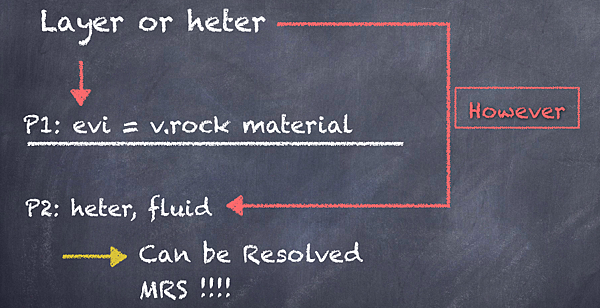 Geologists have long known that the Earth‘s mantle is heterogeneous, but its spatial arrangement remains unresolved — is the mantle essentially layered or irregularly heterogeneous? The best evidence for the layered-mantle thesis is the well-established fact that volcanic rocks found on oceanic islands, islands believed to result from mantle plumes arising from the lower mantle, are composed of material fundamentally different from that of the midocean ridge system, whose source, most geologists contend, is the upper mantle.
 老莊雜記 發表在 痞客邦 留言(0) 人氣(667)
 Islamic law is a particularly instructive example of "sacred law." Islamic law is a phenomenon so different from all other forms of law — notwithstanding, of course, a considerable and inevitable number of coincidences with one or the other of them as far as subject matter and positive enactment are concerned — that its study is indispensable in order to appreciate adequately the full range of possible legal phenomena. Even the two other representatives of sacred law that are historically and geographically nearest to it, Jewish law and Roman Catholic canon law, are perceptibly different.
 老莊雜記 發表在 痞客邦 留言(2) 人氣(523)

 托福TOEFL ibt (4)