About a century ago, the Swedish physical scientist Arrhenius proposed a law of classical chemistry that relates chemical reaction rate to temperature. According to the Arrhenius equation, chemical reaction are increasingly unlikely to occur as temperatures approach absolute zero, and at absolute zero (zero degrees Kelvin, or minus 273 degrees Celsius) reactions stop. However, recent experimental evidence reveals that although the Arrhenius equation is generally accurate in describing the kind of chemical reaction that occurs at relatively high temperatures, at temperatures closer to zero a quantum-mechanical effect known as tunneling comes into play; this effect accounts for chemical reactions that are forbidden by the principles of classical chemistry. Specifically, entire molecules can "tunnel" through the barriers of repulsive forces from other molecules and chemically react even though these molecules do not have sufficient energy, according to classical chemistry, to overcome the repulsive barrier.- 10月 15 週一 201822:25
GRE閱讀|About a century ago, the Swedish physical scientist Arrhenius proposed a law of classical chemistry that relates chemical reaction rate to temperature.
About a century ago, the Swedish physical scientist Arrhenius proposed a law of classical chemistry that relates chemical reaction rate to temperature. According to the Arrhenius equation, chemical reaction are increasingly unlikely to occur as temperatures approach absolute zero, and at absolute zero (zero degrees Kelvin, or minus 273 degrees Celsius) reactions stop. However, recent experimental evidence reveals that although the Arrhenius equation is generally accurate in describing the kind of chemical reaction that occurs at relatively high temperatures, at temperatures closer to zero a quantum-mechanical effect known as tunneling comes into play; this effect accounts for chemical reactions that are forbidden by the principles of classical chemistry. Specifically, entire molecules can "tunnel" through the barriers of repulsive forces from other molecules and chemically react even though these molecules do not have sufficient energy, according to classical chemistry, to overcome the repulsive barrier.- 10月 15 週一 201815:36
GRE閱讀|Flatfish, such as the flounder, are among the few vertebrates that lack approximate bilateral symmetry
Flatfish, such as the flounder, are among the few vertebrates that lack approximate bilateral symmetry (symmetry in which structures to the left and right of the body‘s midline are mirror images). Most striking among the many asymmetries evident in an adult flatfish is eye placement: before maturity one eye migrates, so that in an adult flatfish both eyes are on the same side of the head. While in most species with asymmetries virtually all adults share the same asymmetry, members of the starry flounder species can be either left-eyed (both eyes on the left side of head) or right-eyed. In the waters between the United States and Japan, the starry flounder populations vary from about 50 percent left-eyed off the United States West Coast, through about 70 percent left-eyed halfway between the United States and Japan, to nearly 100 percent left-eyed off the Japanese coast.- 10月 13 週六 201819:54
GRE閱讀|Many theories have been formulated to explain the role of grazers such as zooplankton in controlling the amount of planktonic algae (phytoplankton) in lakes
Many theories have been formulated to explain the role of grazers such as zooplankton in controlling the amount of planktonic algae (phytoplankton) in lakes. The first theories of such grazer control were merely based on observations of negative correlations between algal and zooplankton numbers. A low number of algal cells in the presence of a high number of grazers suggested, but did not prove, that the grazers had removed most of the algae. The converse observation, of the absence of grazers in areas of high phytoplankton concentration, led Hardy to propose his principle of animal exclusion, which hypothesized that phytoplankton produced a repellent that excluded grazers from regions of high phytoplankton concentration. This was the first suggestion of algal defenses against grazing.- 10月 13 週六 201812:20
GRE閱讀|Traditionally, the study of history has had fixed boundaries and focal points — periods, countries, dramatic events, and great leaders
Traditionally, the study of history has had fixed boundaries and focal points — periods, countries, dramatic events, and great leaders. It also has had clear and firm notions of scholarly procedure: how one inquires into a historical problem, how one presents and documents one‘s findings, what constitutes admissible and adequate proof. The recent popular psychohistory, committed to Freudian psychoanalysis, takes a radically different approach. This commitment precludes a commitment to history as historians have always understood it. Psychohistory derives its "facts" not from history, the detailed records of events and their consequences, but from psychoanalysis of the individuals who made history, and deduces its theories not from this or that instance in their lives, but from a view of human nature that transcends history. It denies the basic criterion of historical evidence: that evidence be publicly accessible to, and therefore assessable by, all historians. Psychohistorians, convinced of the absolute rightness of their own theories, are also convinced that theirs is the "deepest" explanation of any event that other explanations fall short of the truth.- 10月 12 週五 201815:57
GRE閱讀|When a molten metal or metallic alloy is cooled to a solid, a crystalline structure is formed that depends on the particular alloy composition
When a molten metal or metallic alloy is cooled to a solid, a crystalline structure is formed that depends on the particular alloy composition. In contrast, molten nonmetallic glass-forming materials, when cooled, do not assume a crystalline structure, but instead retain a structure somewhat like that of the liquid--an amorphous structure. At room temperature, the natural long-term tendency for both types of materials is to assume the crystalline structure. The difference between the two is in the kinetics or rate of formation of the crystalline structure, which is controlled by factors such as the nature of the chemical bonding and the ease with which atoms move relative to each other. Thus, in metals, the kinetics favors rapid formation of a crystal line structure, whereas in nonmetallic glasses the rate of formation is so slow that almost any cooling rate is sufficient to result in an amorphous structure.- 10月 12 週五 201814:53
GRE閱讀|One advantage of breeding African bees with other bee types (Africanization) may be resistance to the parasitic mite Varroa jacobsoni
One advantage of breeding African bees with other bee types (Africanization) may be resistance to the parasitic mite Varroa jacobsoni, a major threat to modern beekeeping. In parts of Europe, this mite is devastating honeybees and killing many colonies despite preventive measures by beekeepers. But in Brazil Varroa jacobsoni has been present in Africanized bees since 1972 without the loss of a single colony, even though beekeepers there undertook no preventive measures. The mites lay eggs within the brood cells of immature bees, and developing mites feed on the hemolymph (blood) of bee pupae. But fewer mites reproduce in Africanized bees than in European bees. Some researchers point out that this resistance may be related to the Africanized worker bee's shorter development period, which prevents some mites from reaching maturity. Recently the mite has become a serious problem in colonies of European bees in North America. Africanization of these bees may be the best safeguard against this parasite.
For the following question, consider each of the choices separately and select all that apply
1. The author cites all of the following as evidence that Africanized bees' resistance to Varroa jacobsoni is superior to that of European bees:
(A) Varroa jacobsoni is killing many bee colonies in Europe.
(B) Beekeepers in Brazil have not used preventive measures to protect their colonies.
(C) At least some European bee colonies have been saved by preventive measures.
2. According to the passage, research suggests that one possible reason the Africanized bees in Brazil have successfully resisted Varroa jacobsoni is that
(A) the life cycle of the Africanized bee may limit the Varroa jacobsoni mite's opportunity to reach full development
(B) the Africanized bees may have had an opportunity to develop a chemical resistance to Varroa jacobsoni
(C) the location of bee colonies in Brazil may provide a natural deterrent to Varroa jacobsoni
(D) Varroa jacobsoni may be relatively new to Brazil and may not have had time to become widespread
(E) beekeepers may have developed effective control techniques for Varroa jacobsoni
3. The author's argument regarding the resistance of Africanized bees to Varroa jacobsoni would be most weakened if which of the following were true?
(A) The bees in Brazil were resistant before being Africanized.
(B) The number of bee colonies in North American increased dramatically whereas the number in Brazil remained unchanged.
(C) Mites found in European bees reproduce at a faster rate than mites of identical species found in the bees in Brazil.
(D) Africanized bees retain many of the characteristics of European bees.
(E) Bee colonies in Europe continue to produce greater quantities of honey than do those in Brazil.
- 10月 11 週四 201818:51
GRE閱讀|The success of fluoride in combating dental decay is well established and, without a doubt, socially beneficial
The success of fluoride in combating dental decay is well established and, without a doubt, socially beneficial. However, fluoride's toxic properties have been known for a century. In humans excessive intake (for adults, over 4 milligrams per day) over many years can lead to skeletal fluorosis, a well-defined skeletal disorder, and in some plant species, fluoride is more toxic than ozone, sulfur dioxide, or pesticides.
- 10月 11 週四 201814:57
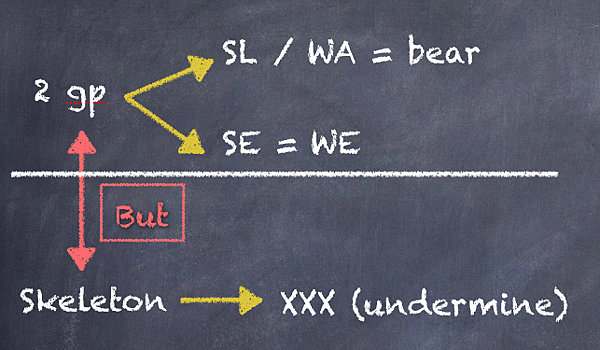
GRE閱讀|Biologists have long maintained that two groups of pinnipeds, sea lions and walruses, are descended from a terrestrial bear like animal
Biologists have long maintained that two groups of pinnipeds, sea lions and walruses, are descended from a terrestrial bear like animal, whereas the remaining group, seals, shares an ancestor with weasels. But the recent discovery of detailed similarities in the skeletal structure of the flippers in all three groups undermines the attempt to explain away superficial resemblance as due to convergent evolution-the independent development of similarities between unrelated groups in response to similar environmental pressures. Flippers may indeed be a necessary response to aquatic life, turtles, whales, and dugongs also have them. But the common detailed design found among the pinnipeds probably indicates a common ancestor. Moreover, walruses and seals drive themselves through the water with thrusts of their hind flippers, but sea lions use their front flippers. If anatomical similarity in the flippers resulted from similar environmental pressures, as posited by the convergent-evolution theory, one would expect walruses and seals, but not seals and sea lions, to have similar flippers.
Why during sickness should body temperature of warm-blooded animal rise? It has long been known that the level of serum iron in animals falls during infection. Garibaldi first suggested a relationship between fever and iron. He found that microbial synthesis of siderophores -- substances that bind iron -- in bacteria of the genus Salmonella declined at environmental temperatures above 37°C and stopped at 40.3°C. Thus, fever would make it more difficult for an infecting bacterium to acquire iron and thus to multiply. Cold-blooded animals were used to test this hypothesis. Kluger reported that of iguanas infected with the potentially lethal bacterium A. hydrophilia, more survived at temperatures of 42°C than at 37°C, even though healthy animals prefer the lower temperature. When animals at 42°C were injected with an iron solution, however, mortality rates increased significantly. Research to determine whether similar phenomena occur in warm-blooded animals is sorely needed.
- 10月 09 週二 201813:27
GRE閱讀|Because of its accuracy in outlining the Earth's subsurface, the seismic-reflection method remains the most important tool
Because of its accuracy in outlining the Earth's subsurface, the seismic-reflection method remains the most important tool in the search for petroleum reserves. In field practice, a subsurface is mapped by line arranging a series of wave-train sources, such as small dynamite explosions, in a grid pattern. As each source is activated, it generates a wave train that moves downward at a speed determined uniquely by the rock's elastic characteristics. As rock interfaces are crossed, the elastic characteristics encountered generally change abruptly, which causes part of the energy to be reflected back to the surface, where it is recorded by seismic instruments. The seismic records must be processed to correct for positional differences between the source and the receiver, for unrelated wave trains, and for multiple reflections from the rock interfaces. Then the data acquired at each of the specific source locations are combined to generate a physical profile of the subsurface, which can eventually be used to select targets for drilling.