 Researchers are finding that in many ways an individual bacterium is more analogous to a component cell of a multicellular organism than it is to a free-living, autonomous organism. Anabaena, a freshwater bacteria is a case in point. Among photosynthetic bacteria, Anabaena is unusual: it is capable of both photosynthesis and nitrogen fixation. Within a single cell, these two biochemical processes are incompatible: oxygen produced during photosynthesis, inactivates the nitrogenase required for nitrogen fixation. In Anabaena communities, however, these processes can coexist. When fixed nitrogen compounds are abundant, Anabaena is strictly photosynthetic and its cells are all alike. When nitrogen levels are low, however, specialized cells called heterocysts are produced which lack chlorophyll ( necessary for photosynthesis ) but which can fix nitrogen by converting nitrogen gas into a usable form. Submicroscopic channels develop which connect the heterocyst cells with the photosynthetic ones and which are used for transferring cellular products between the two kinds of Anabaena cells.
 老莊雜記 發表在 痞客邦 留言(0) 人氣(420)
 For some time scientists have believed that cholesterol plays a major role in heart disease because people with familial hypercholesterolemia, a genetic defect, have six to eight times the normal level of cholesterol in their blood and they invariably develop heart disease. These people lack cell-surface receptors for low-density lipoproteins (LDL‘s), which are the fundamental carriers of blood cholesterol to the body cells that use cholesterol. Without an adequate number of cell-surface receptors to remove LDL‘s from the blood, the cholesterol-carrying LDL‘s remain in the blood, increasing blood cholesterol levels. Scientists also noticed that people with familial hypercholesterolemia appear to produce more LDL‘s than normal individuals. How, scientists wondered, could a genetic mutation that causes a slow-down in the removal of LDL‘s from the blood also result in an increase in the synthesis of this cholesterol-carrying protein?
 老莊雜記 發表在 痞客邦 留言(6) 人氣(302)
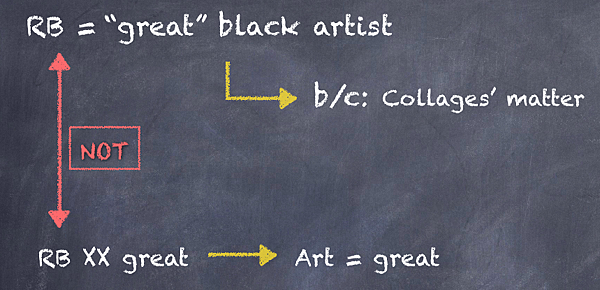 When speaking of Romare Bearden, one is tempted to say, "A great Black American artist." The subject matter of Bearden's collages is certainly Black. Portrayals of the folk of Mecklenburg County, North Carolina, whom he remembers from early childhood, of the jazz musicians and tenement roofs of his Harlem days, of Pittsburgh steelworkers, and his reconstruction of classical Greek myths in the guise of the ancient Black kingdom of Benin, attest to this. In natural harmony with this choice of subject matter are the social sensibilities of the artist, who remains active today with the Cinque Gallery in Manhattan, which he helped found and which is devoted to showing the work of minority artists.
 老莊雜記 發表在 痞客邦 留言(0) 人氣(438)
 A long-held view of the history of the English colonies that became the United States has been that England‘s policy toward these colonies before 1763 was dictated by commercial interests and that a change to a more imperial policy, dominated by expansionist militarist objectives, generated the tensions that ultimately led to the American Revolution. In a recent study, Stephen Saunders Webb has presented a formidable challenge to this view. According to Webb, England already had a military imperial policy for more than a century before the American Revolution. He sees Charles II, the English monarch between 1660 and 1685, as the proper successor of the Tudor monarchs of the sixteenth century and of Oliver Cromwell, all of whom were bent on extending centralized executive power over England‘s possessions through the use of what Webb calls “garrison government.” Garrison government allowed the colonists a legislative assembly but real authority, in Webb‘s view, belonged to the colonial governor, who was appointed by the king and supported by the “garrison,” that is, by the local contingent of English troops under the colonial governor‘s command.
 老莊雜記 發表在 痞客邦 留言(0) 人氣(398)
 Viruses, infectious particles consisting of nucleic acid packaged in a protein coat (the capsid), are difficult to resist. Unable to reproduce outside a living cell, viruses reproduce only by subverting the genetic mechanisms of a host cell. In one kind of viral life cycle, the virus first binds to the cell's surface, then penetrates the cell and sheds its capsid. The exposed viral nucleic acid produces new viruses from the contents of the cell. Finally, the cell releases the viral progeny, and a new cell cycle of infection begins. The human body responds to a viral infection by producing antibodies: complex, highly specific proteins that selectively bind to foreign molecules such as viruses. An antibody can either interfere with a virus's ability to bind to a cell, or can prevent it from releasing its nucleic acid.
 老莊雜記 發表在 痞客邦 留言(0) 人氣(358)

 托福TOEFL ibt (4)