Like most other coastal towns in Norway, the town of Stavanger was quiet and peaceful until the early 1960's, when it became Norway's center for offshore oil exploration. Between then and now, violent crime and vandalism in Stavanger have greatly increased. Stavanager's social problems probably resulted from the oil boom, since violent crime and vandalism have remained low in coastal towns in Norway that have had no oil boom.
- 10月 11 週四 201822:07
GRE批判性推理|Like most other coastal towns in Norway, the town of Stavanger was quiet and peaceful until the early 1960's
Like most other coastal towns in Norway, the town of Stavanger was quiet and peaceful until the early 1960's, when it became Norway's center for offshore oil exploration. Between then and now, violent crime and vandalism in Stavanger have greatly increased. Stavanager's social problems probably resulted from the oil boom, since violent crime and vandalism have remained low in coastal towns in Norway that have had no oil boom.
- 10月 11 週四 201822:07
GRE批判性推理|Like most other coastal towns in Norway, the town of Stavanger was quiet and peaceful until the early 1960's
Like most other coastal towns in Norway, the town of Stavanger was quiet and peaceful until the early 1960's, when it became Norway's center for offshore oil exploration. Between then and now, violent crime and vandalism in Stavanger have greatly increased. Stavanager's social problems probably resulted from the oil boom, since violent crime and vandalism have remained low in coastal towns in Norway that have had no oil boom.
- 10月 11 週四 201818:51
GRE閱讀|The success of fluoride in combating dental decay is well established and, without a doubt, socially beneficial

The success of fluoride in combating dental decay is well established and, without a doubt, socially beneficial. However, fluoride's toxic properties have been known for a century. In humans excessive intake (for adults, over 4 milligrams per day) over many years can lead to skeletal fluorosis, a well-defined skeletal disorder, and in some plant species, fluoride is more toxic than ozone, sulfur dioxide, or pesticides.
- 10月 11 週四 201818:51
GRE閱讀|The success of fluoride in combating dental decay is well established and, without a doubt, socially beneficial
The success of fluoride in combating dental decay is well established and, without a doubt, socially beneficial. However, fluoride's toxic properties have been known for a century. In humans excessive intake (for adults, over 4 milligrams per day) over many years can lead to skeletal fluorosis, a well-defined skeletal disorder, and in some plant species, fluoride is more toxic than ozone, sulfur dioxide, or pesticides.
- 10月 11 週四 201814:57
GRE閱讀|Biologists have long maintained that two groups of pinnipeds, sea lions and walruses, are descended from a terrestrial bear like animal
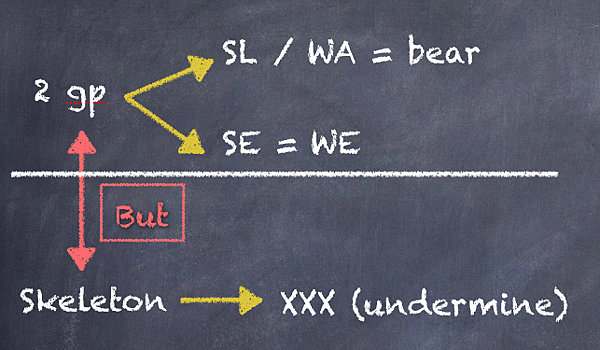
Biologists have long maintained that two groups of pinnipeds, sea lions and walruses, are descended from a terrestrial bear like animal, whereas the remaining group, seals, shares an ancestor with weasels. But the recent discovery of detailed similarities in the skeletal structure of the flippers in all three groups undermines the attempt to explain away superficial resemblance as due to convergent evolution-the independent development of similarities between unrelated groups in response to similar environmental pressures. Flippers may indeed be a necessary response to aquatic life, turtles, whales, and dugongs also have them. But the common detailed design found among the pinnipeds probably indicates a common ancestor. Moreover, walruses and seals drive themselves through the water with thrusts of their hind flippers, but sea lions use their front flippers. If anatomical similarity in the flippers resulted from similar environmental pressures, as posited by the convergent-evolution theory, one would expect walruses and seals, but not seals and sea lions, to have similar flippers.
- 10月 11 週四 201814:57
GRE閱讀|Biologists have long maintained that two groups of pinnipeds, sea lions and walruses, are descended from a terrestrial bear like animal
Biologists have long maintained that two groups of pinnipeds, sea lions and walruses, are descended from a terrestrial bear like animal, whereas the remaining group, seals, shares an ancestor with weasels. But the recent discovery of detailed similarities in the skeletal structure of the flippers in all three groups undermines the attempt to explain away superficial resemblance as due to convergent evolution-the independent development of similarities between unrelated groups in response to similar environmental pressures. Flippers may indeed be a necessary response to aquatic life, turtles, whales, and dugongs also have them. But the common detailed design found among the pinnipeds probably indicates a common ancestor. Moreover, walruses and seals drive themselves through the water with thrusts of their hind flippers, but sea lions use their front flippers. If anatomical similarity in the flippers resulted from similar environmental pressures, as posited by the convergent-evolution theory, one would expect walruses and seals, but not seals and sea lions, to have similar flippers.
Why during sickness should body temperature of warm-blooded animal rise? It has long been known that the level of serum iron in animals falls during infection. Garibaldi first suggested a relationship between fever and iron. He found that microbial synthesis of siderophores -- substances that bind iron -- in bacteria of the genus Salmonella declined at environmental temperatures above 37°C and stopped at 40.3°C. Thus, fever would make it more difficult for an infecting bacterium to acquire iron and thus to multiply. Cold-blooded animals were used to test this hypothesis. Kluger reported that of iguanas infected with the potentially lethal bacterium A. hydrophilia, more survived at temperatures of 42°C than at 37°C, even though healthy animals prefer the lower temperature. When animals at 42°C were injected with an iron solution, however, mortality rates increased significantly. Research to determine whether similar phenomena occur in warm-blooded animals is sorely needed.
Why during sickness should body temperature of warm-blooded animal rise? It has long been known that the level of serum iron in animals falls during infection. Garibaldi first suggested a relationship between fever and iron. He found that microbial synthesis of siderophores -- substances that bind iron -- in bacteria of the genus Salmonella declined at environmental temperatures above 37°C and stopped at 40.3°C. Thus, fever would make it more difficult for an infecting bacterium to acquire iron and thus to multiply. Cold-blooded animals were used to test this hypothesis. Kluger reported that of iguanas infected with the potentially lethal bacterium A. hydrophilia, more survived at temperatures of 42°C than at 37°C, even though healthy animals prefer the lower temperature. When animals at 42°C were injected with an iron solution, however, mortality rates increased significantly. Research to determine whether similar phenomena occur in warm-blooded animals is sorely needed.
- 10月 09 週二 201813:27
GRE閱讀|Because of its accuracy in outlining the Earth's subsurface, the seismic-reflection method remains the most important tool

Because of its accuracy in outlining the Earth's subsurface, the seismic-reflection method remains the most important tool in the search for petroleum reserves. In field practice, a subsurface is mapped by line arranging a series of wave-train sources, such as small dynamite explosions, in a grid pattern. As each source is activated, it generates a wave train that moves downward at a speed determined uniquely by the rock's elastic characteristics. As rock interfaces are crossed, the elastic characteristics encountered generally change abruptly, which causes part of the energy to be reflected back to the surface, where it is recorded by seismic instruments. The seismic records must be processed to correct for positional differences between the source and the receiver, for unrelated wave trains, and for multiple reflections from the rock interfaces. Then the data acquired at each of the specific source locations are combined to generate a physical profile of the subsurface, which can eventually be used to select targets for drilling.
- 10月 09 週二 201813:27
GRE閱讀|Because of its accuracy in outlining the Earth's subsurface, the seismic-reflection method remains the most important tool
Because of its accuracy in outlining the Earth's subsurface, the seismic-reflection method remains the most important tool in the search for petroleum reserves. In field practice, a subsurface is mapped by line arranging a series of wave-train sources, such as small dynamite explosions, in a grid pattern. As each source is activated, it generates a wave train that moves downward at a speed determined uniquely by the rock's elastic characteristics. As rock interfaces are crossed, the elastic characteristics encountered generally change abruptly, which causes part of the energy to be reflected back to the surface, where it is recorded by seismic instruments. The seismic records must be processed to correct for positional differences between the source and the receiver, for unrelated wave trains, and for multiple reflections from the rock interfaces. Then the data acquired at each of the specific source locations are combined to generate a physical profile of the subsurface, which can eventually be used to select targets for drilling.

 托福TOEFL ibt (4)